
When most Americans picture the Revolutionary War, they often imagine George Washington standing tall in a boat crossing the icy Delaware River on Christmas night in 1776. Emanuel Leutze’s famous painting has become one of the defining images of the nation’s founding.
Yet beyond Washington’s commanding figure lies a deeper story; one that reminds us that the American Revolution was never the work of a single man or a single people.
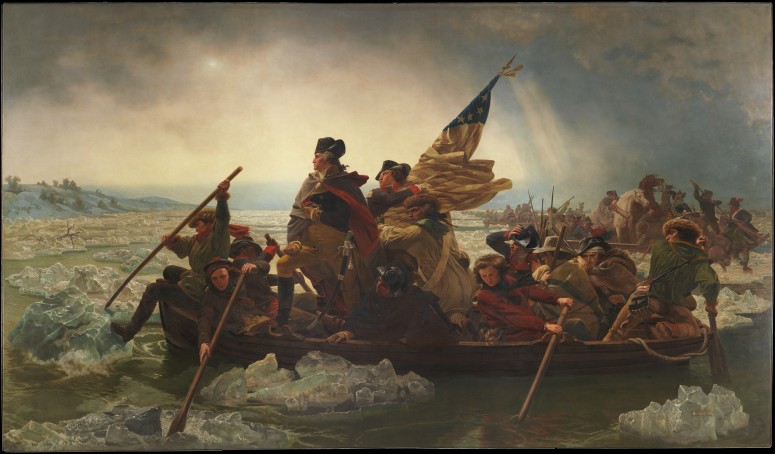
For generations, historians have examined the figures crowded into that boat. One of the most discussed is the man positioned near the front, believed by some scholars to represent Prince Whipple, an enslaved African man who later gained his freedom after serving during the Revolution. Whether or not the figure is truly Whipple, the discussion itself points to a larger truth: people of African, Indigenous, and mixed ancestry were present throughout the nation’s founding, even when their stories were left out of the paintings, monuments, and textbooks that followed.
The struggle for independence was filled with contradictions. The same revolution that proclaimed liberty and self-government existed alongside slavery and the displacement of Native peoples. Yet many individuals who had been denied freedom themselves still chose to shape the future of the emerging nation.
Among them was Crispus Attucks, a sailor of African and Native ancestry whose death during the Boston Massacre in 1770 made him one of the first casualties of the revolutionary movement. Others, like Wentworth Cheswell, a free Black public servant who carried warnings of British troop movements, helped support the patriot cause in ways that history has often overlooked.
Across the colonies, free and enslaved Black men, Indigenous warriors, and people of mixed heritage served in militia units and the Continental Army. Men such as Salem Poor, Peter Salem, Cato Howe, Quamany Quash, and Samuel Ashbow fought for ideals of freedom while navigating a society that did not always extend those freedoms to them.
One of the most significant examples was the First Rhode Island Regiment, one of the first military units in American history to include large numbers of Black and Indigenous soldiers. Their service reminds us that the Revolution was fought by a remarkably diverse coalition of people whose contributions were essential to the nation’s survival.
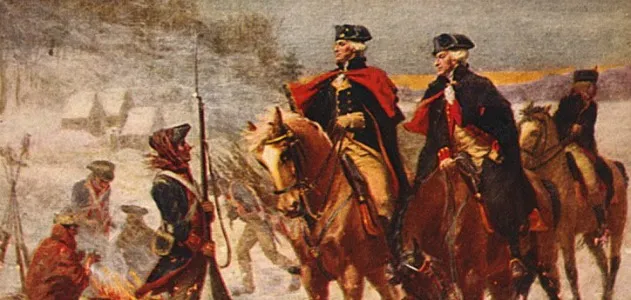
Even George Washington’s own views evolved during the war. Initially hesitant to allow Black men to serve, Washington later accepted their enlistment as the realities of the conflict changed. Throughout the war, he was accompanied by William “Billy” Lee, an enslaved man who became one of his closest aides and remained by his side through many of the Revolution’s defining moments.
One of those moments brought Washington, Alexander Hamilton, the Marquis de Lafayette, and Billy Lee to the Great Falls of the Passaic River in July 1778.
Standing before the powerful waters that had sustained Indigenous communities for thousands of years, Hamilton saw more than a scenic landscape. He envisioned a nation capable of producing its own goods and controlling its own economic destiny. Years later, that vision helped inspire the creation of Paterson, America’s first planned industrial city.
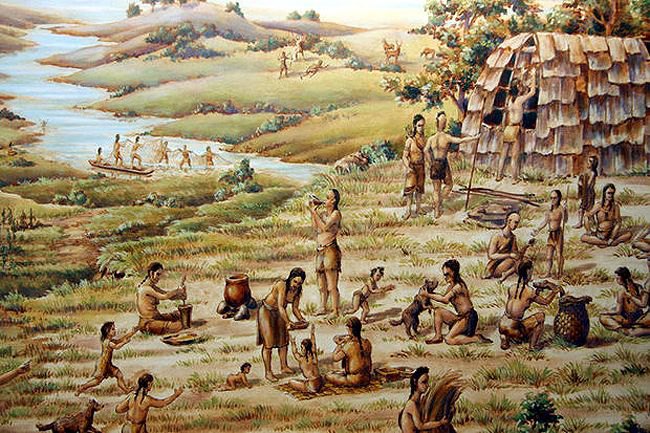
The story of the Great Falls itself reflects the many layers of the American experience. Long before Hamilton arrived, the Lenape people called this place home. Later, immigrant workers from Ireland, Italy, Germany, Syria, Poland, and countless other nations would come to Paterson seeking opportunity. Silk mill workers, labor organizers, entrepreneurs, inventors, and community builders all left their mark on the city.
Their stories remind us that America has always been shaped by many voices, cultures, and identities.
As we commemorate the 250th anniversary of the United States, we have an opportunity to look beyond the familiar portraits and heroic paintings. America250 is not simply about celebrating the nation’s founding; it is about understanding the full story of the people who built it, challenged it, improved it, and continue to redefine it.
At the Great Falls, those stories converge. Here, Indigenous history, the American Revolution, industrial innovation, immigration, labor activism, and community resilience intersect in one extraordinary place.
The American story has never belonged to one person or one community alone. It belongs to all of us.
And perhaps that is the most important lesson of America250.